Audio quality and credibility
Listeners cannot describe what is wrong with bad audio, but they stop listening to it, and they attribute the discomfort to the speaker.
Room before equipment
The largest single improvement available to most speakers costs nothing: choosing a different room. A small room with soft furnishings, curtains and a carpet will produce a better recording through a modest microphone than a large hard-surfaced room will through an expensive one. What makes a recording sound amateur is almost never the microphone; it is the reflections arriving a few milliseconds after the voice.
The practical test is to clap once and listen to what follows. A short dry sound means the room is usable. A ring or a flutter means the reflections will be on the recording, and no amount of later processing removes them cleanly.
Distance, direction and level
Most microphones used for speech are directional, which means they hear what is in front of them far better than what is beside them. Speaking across the microphone rather than straight into it reduces the plosive blasts on hard consonants, and staying at a constant distance matters more than the distance chosen. A speaker who drifts between a hand's width and an arm's length will produce a recording that seems to fade in and out for no visible reason.
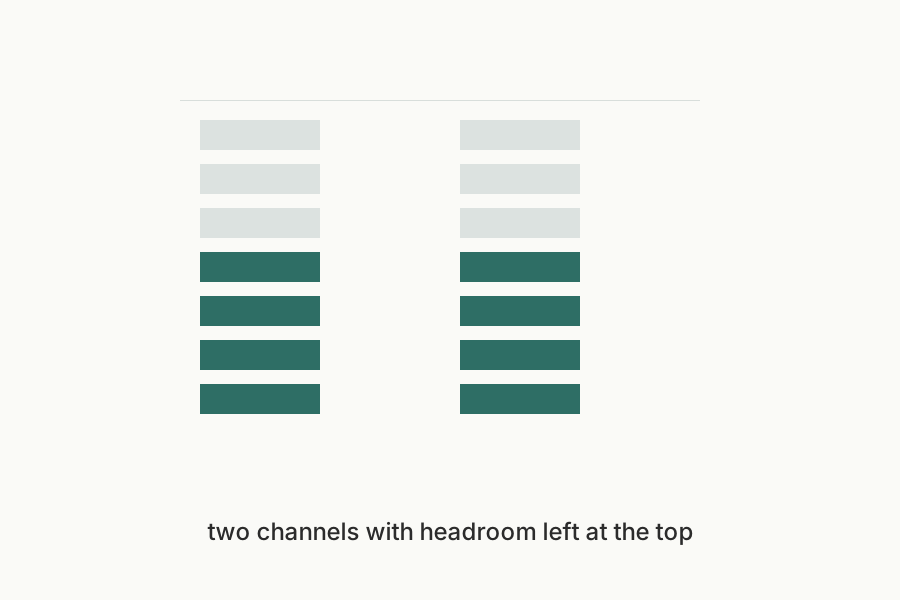
Levels should be set so that ordinary speech sits well below the top of the meter, leaving headroom for the louder moments. A recording that touches the ceiling is permanently damaged at exactly the points where the speaker was most emphatic, which is to say at the points most likely to be used.
Why any of this affects credibility
A listener has no vocabulary for room reflections or clipping, so the discomfort those things cause is attributed to the nearest available cause, which is the person speaking. Studies of how people rate spoken content are consistent on the direction of the effect even where they disagree on its size: the same words, recorded worse, are received worse.
This is not an argument for a studio. It is an argument for a quiet room, a consistent distance and a level with headroom, which together account for most of the available difference and none of the available cost.
A short pre-recording check
- Silence anything with a fan, a compressor or a notification, including the machine doing the recording where possible.
- Record thirty seconds, play it back on headphones, and listen for hum, hiss and room ring before the real recording starts.
- Set the level on the loudest thing likely to be said, not on ordinary speech.
- Record a local backup as well as the remote one; remote connections drop, local files do not.
- Note the time on the clock when recording starts, so a later reference to "about twenty minutes in" can be located.